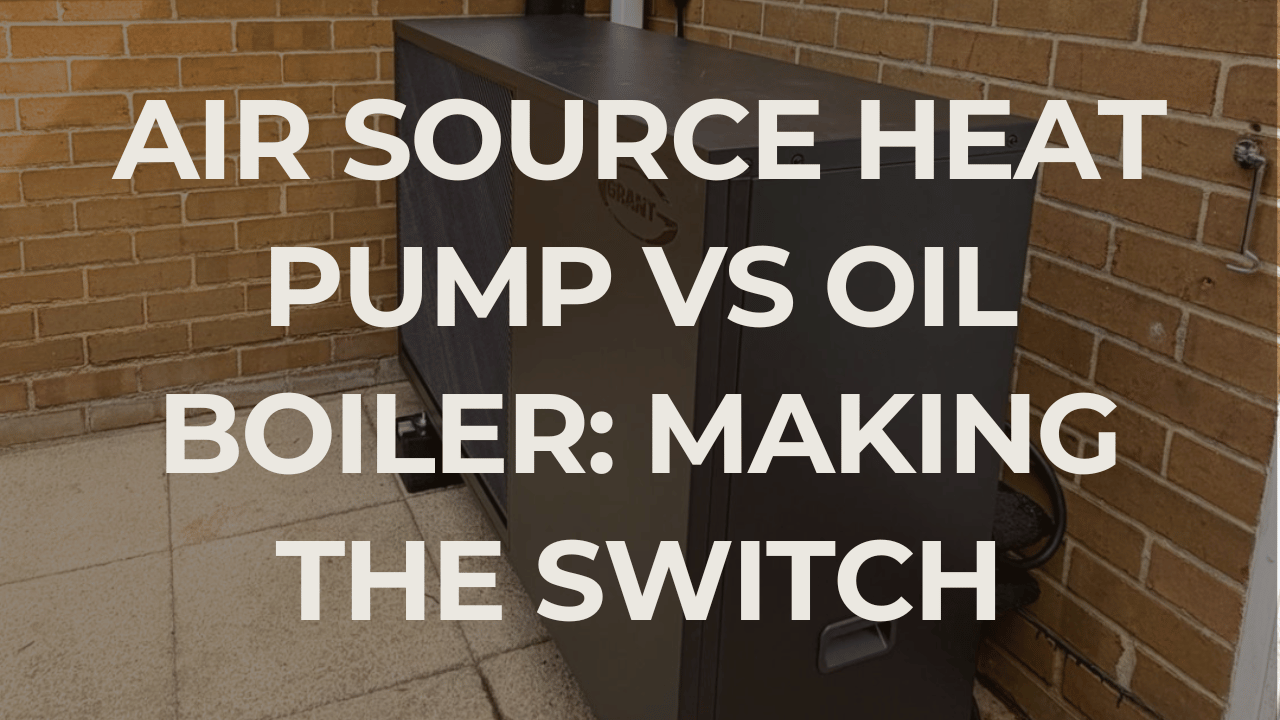
Air source heat pump vs oil boiler: Making the switch
If your home relies on oil central heating, staying warm isn't always as simple as turning up the thermostat. It takes a little forward planning. You need to keep an eye on your tank levels and arrange deliveries before the oil runs too low, particularly during the colder months when demand rises, delivery slots can be harder to secure and oil prices can become more unpredictable.
This is where an air source heat pump offers a very different approach. Instead of burning oil or depending on stored fuel, it draws heat from the outside air and uses electricity to warm your home. With no oil tank to monitor and no deliveries to schedule, day-to-day heating can feel simpler, while also helping to reduce your reliance on fossil fuels and exposure to fluctuating oil costs.
However, because switching from an oil boiler to an air source heat pump is about more than just convenience, it’s important to understand what the change could mean for your home. In this guide, we compare air source heat pumps vs oil boilers to help explain exactly that.
Air source heat pump vs oil boiler: Quick comparison
Here’s a quick look at how the two heating systems compare.
[ADD TABLE]
For most homes, an air source heat pump can be a cleaner, more modern alternative to oil heating. However, it is not a like-for-like swap, so the system needs to be designed around the specific requirements of your property.
A well-designed heat pump installation should take into account your home’s heat loss, radiator sizes, hot water demand, available outdoor space, insulation levels, and existing heating setup. This helps ensure the system is correctly sized, runs efficiently, and can keep your home comfortable throughout the year.
Quick answer: Is an air source heat pump better than an oil boiler?
An air source heat pump can be a better choice than an oil boiler if you want a cleaner, lower-carbon way to heat your home without relying on regular oil deliveries.
It may be worth considering if:
- Your oil boiler is old, unreliable, or costly to repair
- Your oil tank needs maintenance or replacement
- You want to reduce reliance on heating oil
- Your home is reasonably well insulated
- You have space outside for a heat pump unit
- You have room for a hot water cylinder
- You are interested in solar panels, battery storage, or other energy upgrades
- You want to explore available grant support
If an air source heat pump sounds like a good fit, the next step is to check whether your home is suitable. Unlike replacing one boiler with another, switching to a heat pump requires a heat loss survey. This looks at how much heat your property loses and helps determine the correct system size and setup.
Air source heat pump vs oil boiler running costs
Running costs are one of the main things homeowners want to understand when comparing an air source heat pump with an oil boiler.
In many cases, a well-designed air source heat pump can be a lot cheaper to run than an older oil boiler, especially in a well-insulated home with suitable radiators and smart heating controls.
We have seen this in real SGS Energy customer heat loss reports, where switching from oil heating to an air source heat pump showed estimated annual running cost savings of between £575 and £2,014.
For example:
[table]
These examples show the kind of savings that can be possible. But they also highlight that running costs vary from property to property.
Your actual costs will depend on factors such as:
- Your home’s heat loss and insulation levels
- The size and condition of your radiators
- Your electricity tariff
- The age and efficiency of your current oil boiler
- The heat pump’s seasonal efficiency
- Your hot water use
- How your heating controls are set up
- Whether you have solar PV or battery storage
That's why the most accurate way to compare the likely costs for your home is to start with a proper heat loss report and system design. This gives you a comparison based on your property, your heating demand and realistic efficiency figures, rather than generic estimates.
What grants are available for replacing oil heating with a heat pump?
If you’re considering replacing an oil boiler with an air source heat pump, government funding could help make the switch more affordable.
In England and Wales, the Boiler Upgrade Scheme provides support for eligible property owners who want to replace a fossil fuel heating system, such as an oil boiler, with a low carbon alternative.
At the time of writing, the standard grant for an air source heat pump is £7,500. From 21 July 2026, however, eligible off-gas-grid properties replacing oil or LPG heating may be able to access increased support of up to £9,000. This higher level of funding is currently set to run until 31 March 2027, creating a limited window for some oil-heated homes to benefit.
However, grant rules, eligibility criteria and deadlines can change, so it’s important to check the latest guidance before making any decisions. Before you commit to replacing your oil boiler, SGS Energy can help you understand what funding may be available.
Will you need new radiators for an air source heat pump?
Possibly, but you may not need to replace every radiator. Air source heat pumps usually work best at lower flow temperatures than oil boilers, so your home may need larger radiators, underfloor heating, or a mix of both to warm each room effectively.
Some existing radiators may already be suitable, while others may need upgrading so they can deliver enough heat at a lower water temperature. The only way to know for sure is through a room-by-room heat loss calculation, which shows how much heat each space needs.
Will you need planning permission for an air source heat pump?
In most cases, air source heat pumps are treated as permitted development, so planning permission isn't usually needed.
However, there are exceptions. Extra checks may be needed if your property is:
- Listed
- In a conservation area
- Subject to local restrictions
Outdoor unit placement can also matter. Noise, available space, visual impact, and the position of nearby boundaries may need to be considered.
SGS Energy can help you understand what applies before installation begins.
What happens to the old oil boiler and tank?
If you switch fully away from oil heating, your existing boiler will usually be disconnected. A specialist third-party company can then assess the oil tank and advise on the most suitable next step.
Depending on its condition, the tank may be repurposed, taken away for disposal, or safely decommissioned if it is staying in place.
Taking the tank away can free up outdoor space and reduce the ongoing practical issues that come with storing oil at home, from arranging deliveries to keeping the tank secure.
Air source heat pump vs oil boiler: Which should you choose?
The right choice depends on your home, budget, and long-term plans.
Replacing an oil boiler like-for-like can feel simpler, but it means staying reliant on heating oil and the upkeep that comes with it. An air source heat pump may be a better fit if you’re ready to move away from oil and plan for a lower-carbon heating system.
The best place to start is with a property-specific survey. SGS Energy can assess your current setup, confirm whether a heat pump is suitable, and design a system that works for your home.
Thinking about replacing your oil boiler with an air source heat pump? Book your free consultation with SGS Energy and start your oil-to-heat-pump survey today.
FAQs
Do air source heat pumps work In older homes?
Yes, heat pumps can work in older homes, but design is important. Older properties may need insulation improvements, radiator upgrades, or pipework checks. A heat loss calculation will show what each room needs before installation.
Do you need underfloor heating for an air source heat pump?
No, you don't always need underfloor heating. Air source heat pumps can work with radiators, as long as the radiators are correctly sized for lower flow temperatures. Some radiators may need upgrading, but others may already be suitable.
Is an air source heat pump worth it for an oil-heated home?
An air source heat pump may be worth considering if your oil boiler is getting old, your oil tank needs attention, or you’re ready for cleaner heating without the hassle of fuel deliveries. It can also fit well as part of wider home energy improvements, especially if you’re already thinking about better insulation, solar panels, battery storage, or smarter heating controls.