How are solar panels installed?
Solar panels are installed by attaching them securely to your roof and connecting them to your home so they can turn sunlight into electricity you can use.
In simple terms, installers fix strong brackets to your roof, place the panels on top, and then connect everything to a device called an inverter, which makes the electricity safe for your home.
There are a few steps involved before everything is up and running. Your roof is checked first to make sure it’s suitable, then the panels are fitted, the wiring is completed, and the system is tested to confirm it works properly.
This guide explains each stage of how solar panels are installed in a clear, straightforward way, so you know exactly what to expect at every step.
Solar panel installation: A step-by-step overview
Most residential solar installations follow a clear sequence:
- Roof assessment and system design
- Scaffolding setup
- Mounting system installation
- Solar panel fitting
- Electrical connection (DC to AC via inverter)
- Testing and commissioning
In many UK homes, installation is usually completed within one to two days once work begins.
What happens before solar panels are installed?
As we just hinted at, before any equipment goes on the roof, installers assess whether your home is suitable for solar.
This stage usually includes:
- Reviewing roof size, pitch, and orientation
- Checking for shading from trees, chimneys, or nearby buildings
- Assessing the condition and structure of the roof
- Analysing current electricity usage
- Discussing battery storage options if relevant
Installers will also confirm compliance with MCS (Microgeneration Certification Scheme) standards and check if approval is needed from your local DNO (Distribution Network Operator).
Homes with good sun exposure and a structurally sound roof tend to be more straightforward to work with. If repairs are needed, these are usually addressed before solar panel system installation begins.
Do you need planning permission for fitting solar panels?
In many cases, installing solar PV falls under permitted development rights, so full planning permission isn’t usually required.
There are exceptions. Additional checks may be needed if:
- The property is listed
- The home is in a conservation area
- Panels would extend unusually far from the roof surface
- The installation forms part of a wider restricted development
A professional installer should highlight any planning considerations early in the process, though it's always worth confirming local requirements.
How are solar panels installed on a roof?
When people ask how solar panels are installed on a roof, they're usually focused on how the system is secured and how the roof is protected.
The process typically follows these stages.
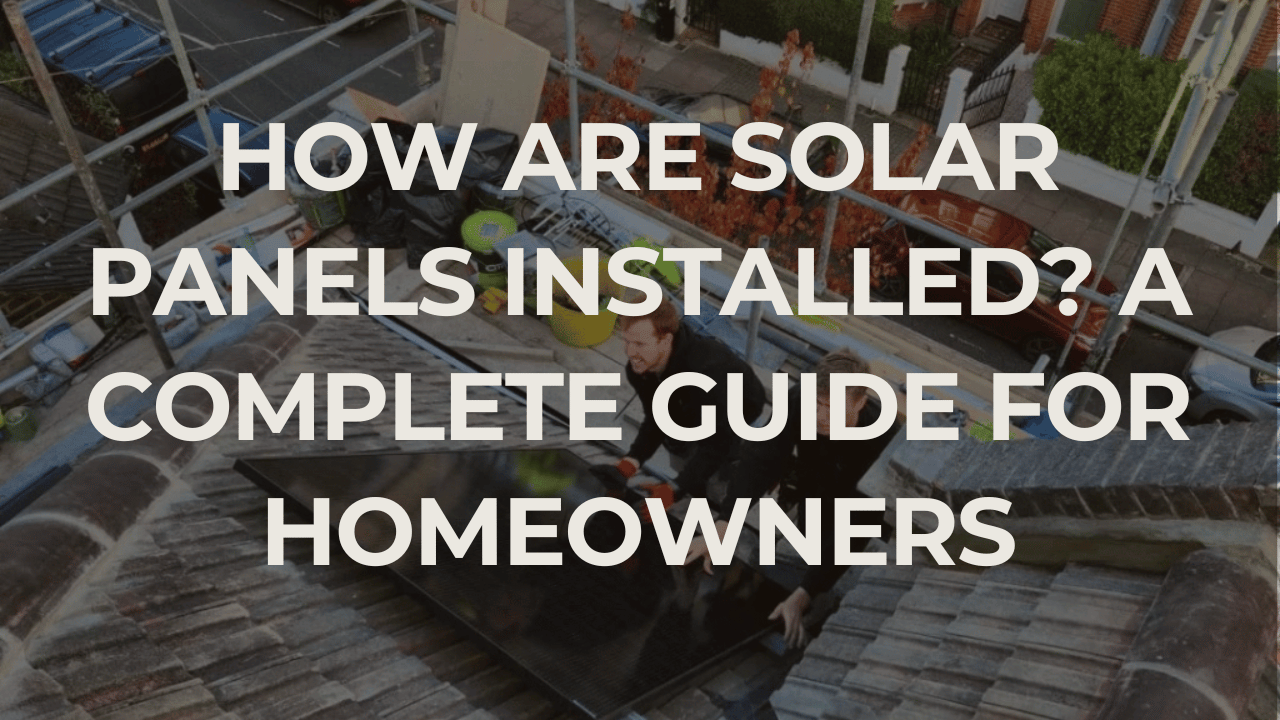
- Scaffolding is erected: Scaffolding is installed to allow safe access to the roof and provide a stable working platform.
- The roof is prepared: Installers inspect the work area and identify fixing points. Roof tiles may be lifted or temporarily adjusted to access the rafters beneath.
- Mounting brackets and rails are fitted: Brackets or roof hooks are fixed directly to the roof structure. Aluminium rails are then attached to create a stable framework for the panels.
- The solar panels are secured: Panels are mounted onto the rails and fastened into position based on the system design.
In most installations, panels aren't drilled directly into tiles. The mounting system is designed to maintain the roof’s weatherproofing while providing long-term stability.
What happens inside the home?
Solar installation also involves indoor electrical work.
Once the panels are in place, installers connect the system to your home. This usually includes:
- Installing an inverter to convert DC electricity into usable AC power
- Running cabling from the roof to the inverter
- Connecting the system to the consumer unit
- Installing a generation meter or integrating with a smart meter
- Adding battery storage if included
Inverters are typically installed in lofts, garages, or utility areas where they can operate safely and efficiently.
What happens after the panels are installed?
Once the panels are in place, the system goes through a final setup and testing stage before it’s ready to use.
This includes:
- Checking that all electrical connections are safe
- Making sure the inverter is working correctly
- Confirming the system is generating electricity
- Setting up any monitoring tools or apps
Installers will also walk you through how everything works, so you know how to track your energy use and understand your system’s performance.
You’ll receive important documents too, such as certificates, warranty details, and any information needed to connect your system to the grid.
Is there much disruption during solar roof installation?
Disruption is usually manageable for most households.
You can expect:
- Scaffolding around part of the property
- Installers moving between roof and indoor areas
- Some noise during mounting and electrical work
- Temporary access to loft or utility spaces
- Electricity may be turned off briefly while connections are completed.
Can any roof support solar panels?
Many homes can support solar panels, though suitability varies.
Key factors include:
- Roof orientation and pitch
- Available surface area
- Shading from surrounding objects
- Structural condition
- Roof material and layout
A less-than-ideal roof doesn't rule solar out, though it may affect system design and output.
A professional survey provides the clearest answer.
What happens if your roof needs work first?
Solar panels shouldn't be installed on a roof that requires repair. If there are damaged tiles or structural concerns, addressing these before installation helps avoid future disruption and additional costs. Installers will usually flag any issues during the survey stage.
Are solar panels difficult to maintain after installation?
Solar panels are generally low maintenance once installed.
However, it's still worth monitoring:
- System performance through your app
- Dirt or debris build-up
- Changes in shading
- Alerts or faults
- Visible damage after severe weather
That said, most systems continue operating efficiently with minimal ongoing input.
Talk to SGS Energy about solar panel installation
As we’ve covered in this guide, solar panels are installed through a clear, step-by-step process. What makes the difference is how carefully that process is planned and carried out.
SGS Energy has been installing renewable energy systems since 2010, supporting homeowners and businesses across the South East. What started as a small solar company has grown into a team that manages everything in-house, from system design through to installation and ongoing support. Having everything under one roof means your system is designed and installed as one complete solution.
If you’re looking into how solar panels are installed and want a clearer idea of what it would involve for your home or business, SGS Energy can talk you through your options and next steps.
Get in touch below to discuss your solar installation.
FAQs
How are solar panels installed?
Solar panels are installed using a mounting system fixed to the roof structure. Panels are secured to rails and connected to an inverter and the home’s electrical system.
How are solar panels installed on a roof?
Installers prepare the roof, fit brackets to rafters, attach mounting rails, and secure panels in place. The method depends on the roof type and system design.
Do solar panel installers remove roof tiles?
Tiles may be lifted or adjusted to allow brackets to be fixed securely. In some cases, specialised tiles are used.
Do solar panels damage your roof?
When installed correctly, solar panels should not damage the roof. Professional systems are designed to maintain weatherproofing and structural integrity.
Is scaffolding needed for solar panels?
Scaffolding is commonly used to allow safe access and efficient installation.
How long does it take to install solar panels?
Most residential systems are installed within one to two days, depending on complexity.
What happens after solar panels are installed?
The system is tested, connected, and commissioned. Monitoring is set up so performance can be tracked.
Can solar panels be removed and reinstalled?
Yes, panels can be removed and reinstalled if needed, for example during roof repairs or renovations.