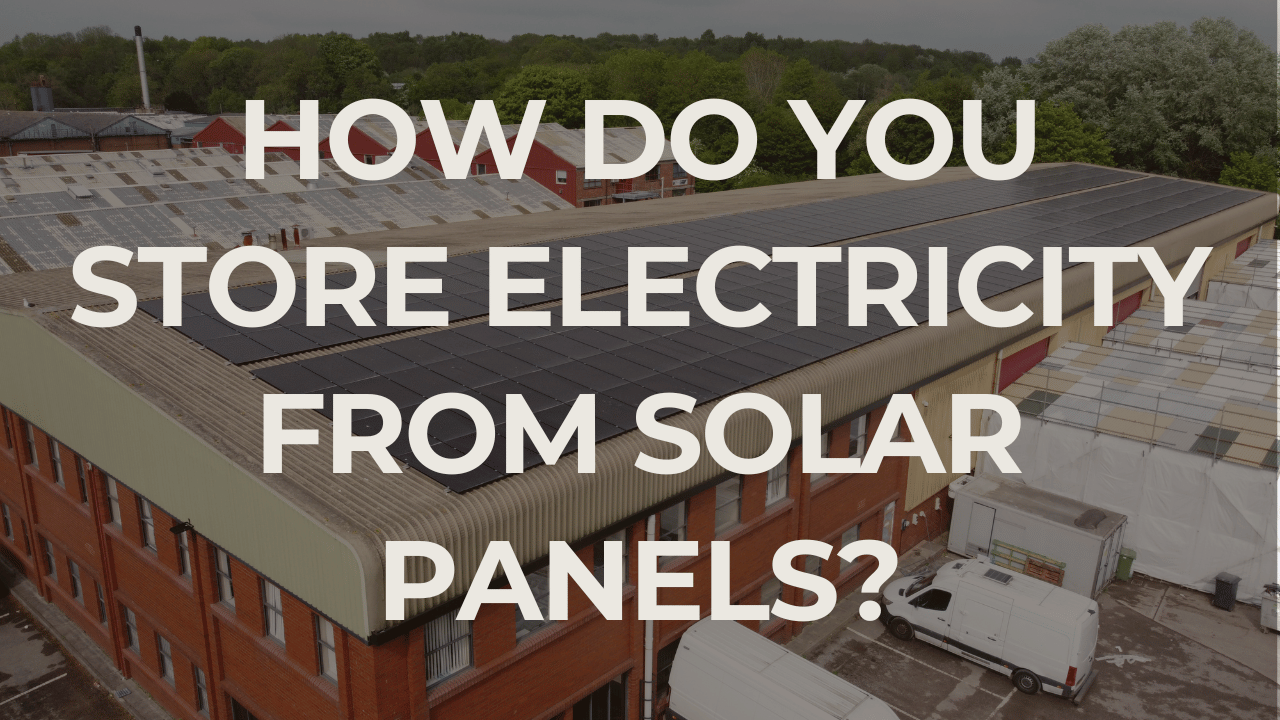
How do you store electricity from solar panels?
Solar panels often generate the most electricity during the day, when many homes are using less power. So, what happens to the electricity you don’t use straight away?
In many cases, surplus solar power is sent back to the grid. It can also be used elsewhere in the home, such as to heat water or charge an electric vehicle. But for homeowners who want to make better use of the electricity their panels generate, solar power and storage can work together to reduce reliance on grid electricity.
A solar battery stores unused solar electricity so it can be used later, including in the evening, overnight, or at times when your panels are producing less. This can help reduce how much electricity you buy from the grid and make your home less reliant on external power.
Why do solar panels produce excess electricity?
Solar panels generate electricity whenever there's enough daylight. So, during bright periods, especially around the middle of the day, your panels may produce more electricity than your home is using at that moment.
Without a storage or export solution, that spare electricity will usually be sent to the grid. That isn't necessarily a bad thing, but many homeowners want to make better use of the energy generated by their own panels before buying electricity back from the grid later.
Storing electricity or redirecting excess solar power can help you:
- Use more of the electricity your panels generate
- Buy less electricity from the grid
- Lower your energy bills
- Make better use of smart tariffs, where available
- Power other home technologies, such as hot water, low-carbon heating or EV charging
- Reduce your reliance on fossil fuel-generated electricity
Best ways to store or use excess solar energy
There are several ways to store or make use of excess electricity from solar panels. The right option will depend on how your property uses energy, the amount of energy your system produces, and what you want to get from your solar PV system:
[INSERT TABLE]
1. Solar battery storage
A solar battery is the most direct way to store electricity from solar panels. Most domestic solar batteries use lithium ion batteries, although battery technologies continue to develop.
Here’s how it works:
- Your solar panels generate electricity during daylight hours.
- Your property uses that electricity first.
- If your panels generate more electricity than you need at that moment, the extra electricity can charge your battery.
- Later, such as in the evening or overnight, your property can use electricity from the battery instead of buying it from the grid.
Solar battery storage can be especially useful if:
- You use more electricity outside daylight hours
- You're often away from the property during the day
- You want to reduce how much electricity you buy from the grid
- You have higher electricity demand from a heat pump, electric vehicle charger or other electrical systems
- You are on a time-of-use tariff, where electricity prices change depending on the time of day
Smart tariffs are often designed around supply and demand. Electricity can cost more at peak times, when peak demand is higher, and less when demand is lower. A battery may help you use stored solar electricity when grid electricity is more expensive.
What size solar battery do you need?
The right battery size depends on how much surplus solar electricity your system produces and how much of that electricity you're likely to use later.
Getting the size right is important:
- If the battery is too small, it may fill up quickly and leave more excess electricity to be exported.
- If the battery is too large, you could end up paying for capacity you rarely use.
To recommend a suitable battery size, SGS Energy will usually look at:
- Your annual electricity usage
- The size of your solar PV system
- How much excess electricity your panels are likely to generate
- When you use the most electricity
- Whether you plan to charge the battery from the grid on a smart tariff
This helps match the battery to your property, rather than simply choosing the largest option available.
2. Charging an electric vehicle with excess solar
If you have an electric vehicle, spare electricity from your solar panels can be used to help charge it at home instead of being exported to the grid.
With a solar-compatible EV charger, your system can prioritise this excess solar power and send it to your car when it’s available. This can reduce how much electricity you need to buy from your energy supplier, especially if your EV is parked at home during daylight hours while your panels are generating.
If your car is usually away during the day, a solar battery may be a better way to make use of your surplus solar electricity, as it can store some of that power for later.
3. Redirecting solar power to hot water
Another way to use spare solar electricity is to redirect it to an immersion heater or compatible hot water system. This is sometimes described as a form of thermal energy storage, because excess electricity is used to heat water that can be used later.
This can be useful if your home has regular hot water demand and your solar panels often produce more electricity than you need during the day.
4. Exporting electricity through the Smart Export Guarantee
If your solar panels generate more electricity than your home can use or store, you can export the excess to the grid.
In Great Britain, this is usually done through a Smart Export Guarantee, or SEG, tariff. Instead of net metering, SEG tariffs pay eligible households for renewable electricity exported to the grid.
To receive SEG payments, you normally need to apply to an energy supplier offering an export tariff. You may also need a suitable smart meter and proof that your renewable energy system has been installed to the required standard.
Exporting can be a good option when:
- Your battery is full
- You don't have a battery
- Your home produces more solar electricity than it can use
- Your export tariff is attractive
- You want to earn from unused renewable electricity
However, export rates vary, so it's worth comparing the value of exporting against the savings from using more of your solar electricity at home.
Which option is best for excess solar electricity?
For most homes, the best approach is to use as much solar power on site as possible, then export anything left over to the grid.
The right option depends on your energy habits. If you use a lot of electricity in the evening or overnight, a solar battery may help you store daytime generation for later. If you use most of your electricity during the day, you may already be using much of what your panels produce.
Exporting can still be worthwhile for any power you cannot use or store. This may be the case if your battery is full, your daytime demand is low, or your export tariff offers a competitive rate.
The key is to compare the value of exporting with the savings you could make by using more of your own solar power.
Get help choosing the right solar storage system
The best way to store electricity from solar panels depends on your property, your energy usage and your future plans.
SGS Energy can help you choose the right combination of solar panels, battery storage, energy diverters and EV charging, so you can make better use of the electricity your system generates.
If you are not sure what size battery you need, or whether storage is worth it for your home, speak to SGS Energy for tailored advice.
Ask SGS Energy to size your solar battery
FAQs
How do you store electricity?
In a home solar system, electricity is usually stored in a solar battery. When your panels generate more electricity than your home is using, the spare power charges the battery. The battery then holds that energy until you need it later, such as in the evening or overnight.
What happens to excess solar power when batteries are full?
When your solar battery is full, excess electricity can be exported to the grid, diverted to hot water, used for EV charging or sent to another compatible system. The best option depends on your installation.
Do I need a battery for solar panels?
You don't need a battery for solar panels to work, but adding one can help you use more of the electricity your panels generate. Without a battery, unused electricity is usually exported to the grid.