%20.png)
How solar energy storage batteries work (UK guide for homeowners)
Solar battery storage works by storing the extra electricity your solar panels generate during the day so you can use it later.
In a nutshell, this is how it works:
During daylight hours, your home uses the electricity from your solar panels. However, if you generate more power than you need, the excess energy is stored in a battery rather than sent back to the grid.
Then, later on, when your panels aren’t producing as much energy, like in the evening or on very cloudy days, the battery steps in and powers your home using the energy you saved earlier.
With that said, let's take a closer look at how solar energy storage batteries work in practice:
How solar energy storage batteries work step-by-step
A simple way to understand solar battery storage is to follow what happens to the electricity your panels generate throughout the day.
Let's take a closer look:
1. Your solar panels generate electricity
Solar panels, also called solar PV panels, capture energy from sunlight and convert it into electricity for your home. They work best in strong daylight, though they can still produce electricity in cloudy conditions.
2. Your home uses solar electricity first
When your solar panels start generating electricity, your home uses that power first. That way, appliances running during the day are powered directly by solar energy instead of the grid.
3. Extra electricity is stored and used when needed
If your solar energy panels produce more electricity than your home needs, the excess is stored in a battery rather than sent to the grid.
Later, when your panels aren’t generating as much, such as in the evening or during dull weather, the battery releases that stored energy to power your home, reducing how much electricity you need from the grid.
4. The grid fills any remaining gap
If your solar panels and battery can’t meet your electricity needs, your home automatically draws power from the grid.
5. Surplus electricity can be exported
Once your battery is full, any additional solar electricity can be exported to the grid instead of going to waste. That energy is then used by other homes and businesses.
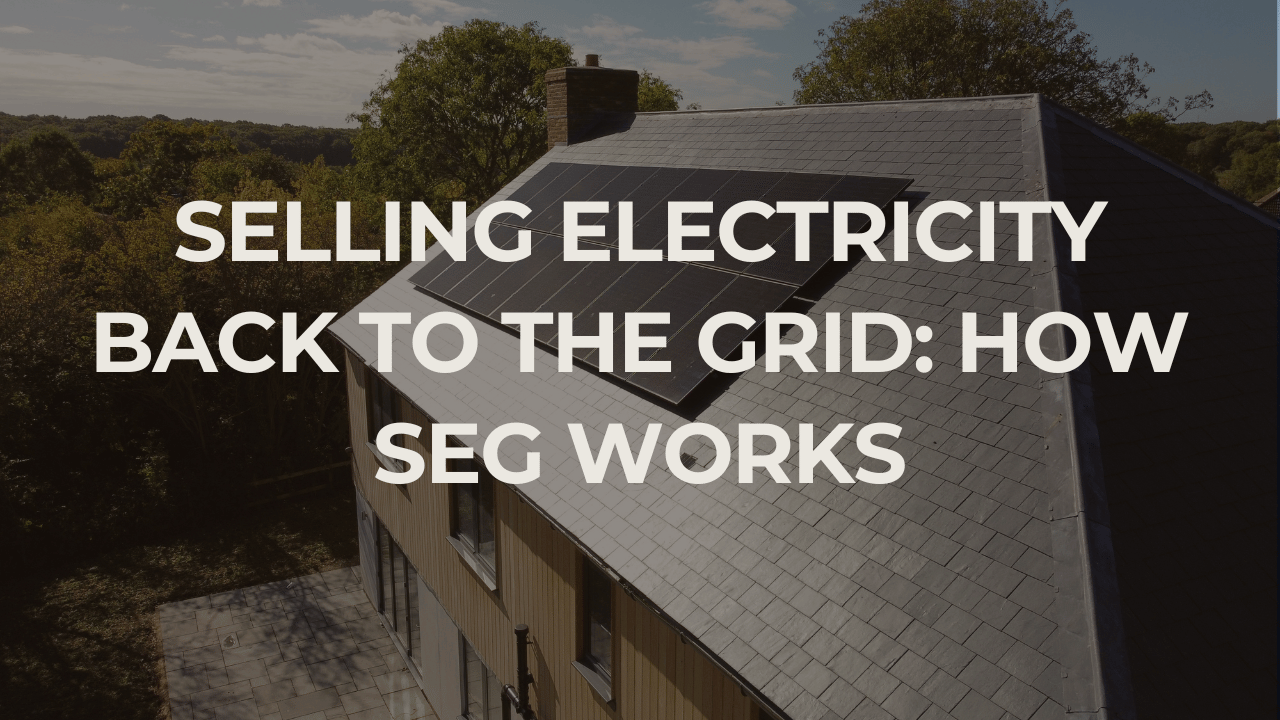
In the UK, this exported electricity can also earn you money through the Smart Export Guarantee. Energy suppliers offer tariffs that pay you for each unit (kWh) you send back to the grid.
You’ll need to sign up for one of these tariffs, as payments aren’t applied automatically. Rates vary between suppliers, so what you earn will depend on the deal you choose.
This gives you flexibility in how you use your solar energy. You can power your home, store electricity for later, or export any surplus once your battery is full.
What makes up a solar battery storage system?
A typical solar battery storage setup includes a few main parts.
- Solar panels: These generate the electricity.
- Battery: This stores surplus electricity for later use.
- Inverter: Solar panels generate direct current (DC) electricity that flows in one direction. Homes, however, run on alternating current (AC), where the flow of electricity changes direction. An inverter acts as the bridge between the two, converting DC electricity into AC so it can safely power your lights, appliances, and sockets.
- Battery management system: This system monitors and controls the battery. It manages charging and discharging, protects against overheating or overcharging, and helps maintain performance over time.
- Monitoring system: Many systems include an app or monitoring portal that shows how much electricity your panels are generating, how much is being stored, and how much your home is importing or exporting.
- Grid connection: Your grid connection allows your home to import power when needed and export surplus electricity where relevant.
Can a solar battery charge from the grid?
Yes, some solar batteries can charge using electricity from the grid, not just from your solar panels.
At first, that might sound a bit odd. The main purpose of a solar battery is to store the energy your panels generate. However, in some situations, charging from the grid can actually help you save money.
This usually comes into play if you’re on a time-of-use tariff. These tariffs charge different prices for electricity depending on the time of day. For example, electricity is often cheaper overnight when demand is lower.
In that case, your battery can be set to charge during those cheaper hours. Then, later in the day when electricity is more expensive, your home can use the stored energy instead of buying it from the grid at a higher rate.
AC-coupled vs DC-coupled battery storage
When you start looking into solar battery storage, you’ll usually come across two types of systems:
- DC-coupled
- AC-coupled
These terms describe how your battery connects to your solar panels and your home.
DC-coupled systems
As we've already mentioned, solar panels generate electricity in one form (DC), but your home uses another (AC). In a DC-coupled setup, the electricity can go straight into the battery in its original form before being converted.
This type of system is often used when solar panels and a battery are installed at the same time. It can be a more streamlined setup, as everything is designed to work together from the start.
AC-coupled systems
In an AC-coupled system, the battery is connected after the electricity has already been converted into the form your home uses. Solar energy is used in your home first, and any excess is then converted again before being stored in the battery. This approach makes it easier to add battery storage to an existing solar setup.
Does solar battery storage work during a power cut?
Sometimes, but not always.
Some battery systems can provide backup power during an outage, but this depends on the battery, the inverter, and whether the system has been configured for backup operation. It's not safe to assume every solar battery system will keep your home running during a power cut.
Pro Tip: Ask your installer what your system will and won't work during a power outage.
What size solar battery do you need?
The right battery size depends on:
- How much electricity your home uses
- The size of your solar panel system
- How you plan to use the stored energy
According to the Energy Saving Trust, solar batteries typically range from around 1 to 16 kWh. As a general guide, homes with lower electricity use tend to need smaller batteries, while homes with higher demand will benefit from more storage capacity.
For example, homes that rely on fossil fuel heating usually use less electricity overall, so a battery of around 5 kWh may be sufficient. In contrast, homes with a heat pump or electric heating rely more heavily on electricity, which often means a larger battery, such as 9 kWh, is more suitable.
To get a clearer idea of what size battery might work for you, it helps to think about how your home uses energy:
- How much electricity do you use in the evening, when solar panels aren’t generating?
- Do you already have solar panels, or are you installing a new system?
- Does your home use an air source heat pump or electric heating?
- Are you planning to add an electric vehicle in the future?
- Would you want to charge your battery from the grid during cheaper off-peak hours?
Your answers to these questions will give an installer a better picture of your energy needs and help them recommend a battery size that fits your home.
How long does solar battery storage last?
Solar batteries don’t last as long as solar panels, so replacement is usually part of the long-term picture. According to the Energy Saving Trust, a typical solar battery lasts around 10 to 12 years, while solar panels often last 20 years or more.
Pro Tip: As lifespan can vary depending on the product and how it’s used, it’s worth checking warranty terms alongside capacity when comparing options.
Is solar battery storage worth it?
That depends on your home, your energy use, and what matters most to you.
Costs vary widely depending on the type of battery, its capacity, and how it’s installed. According to the Energy Saving Trust, solar battery storage can range from around £1,500 to £10,000, with a typical 5 kWh system costing about £4,600. That said, many systems fall somewhere between £5,000 and £8,000, depending on the setup.
What matters next is how that cost translates into day-to-day use and potential savings:
Battery storage can help you:
- Use more of the electricity your solar panels generate
- Reduce how much power you need from the grid
- Take advantage of off-peak tariffs where available
However, the Energy Saving Trust notes that while this can lead to savings on electricity bills, those savings need to be weighed against the upfront cost and the battery's lifespan.
For some homeowners, the decision comes down to cost and payback. Others are more interested in how battery storage fits into their wider energy use, such as storing solar power for later in the day or preparing for higher electricity demand from an electric vehicle or heat pump.
The bottom line: A tailored quote is usually the best way to understand how the costs and potential savings compare for your home.
Is solar battery storage right for your home?
As we’ve explored throughout this guide, the basic idea behind solar battery storage stays the same, but how it works in practice can vary from home to home depending on how and when you use electricity.
So, rather than trying to generalise, the most useful next step is to look at your own setup. A tailored quote can show what size system makes sense, how it would perform in practice, and what the costs and savings could look like.
Contact SGS Energy below to find out more.
FAQs
How does solar battery storage work in simple terms?
It stores the extra electricity your solar panels generate during the day so you can use it later, usually in the evening or when solar output is low.
Can I add battery storage to existing solar panels?
Yes, in many cases you can. This is often done through an AC-coupled setup, though the right approach depends on your current system and equipment.
Does a solar battery work in winter?
Yes, but performance depends on how much electricity your panels generate and how much energy your home uses. Solar panels usually produce less in winter than in summer.
Is it better to store solar energy or export it?
That depends on your tariff, your battery size, and how much electricity you use later in the day. Some homes benefit most from storing surplus power. Others may find value in a mix of storage and export through an SEG tariff.
Can a solar battery be charged overnight?
Some systems can charge from the grid overnight, which can work well with time-of-use tariffs.
Does solar battery storage work during a power cut?
Some systems do, but not all. Backup power depends on the battery, inverter, and system design.