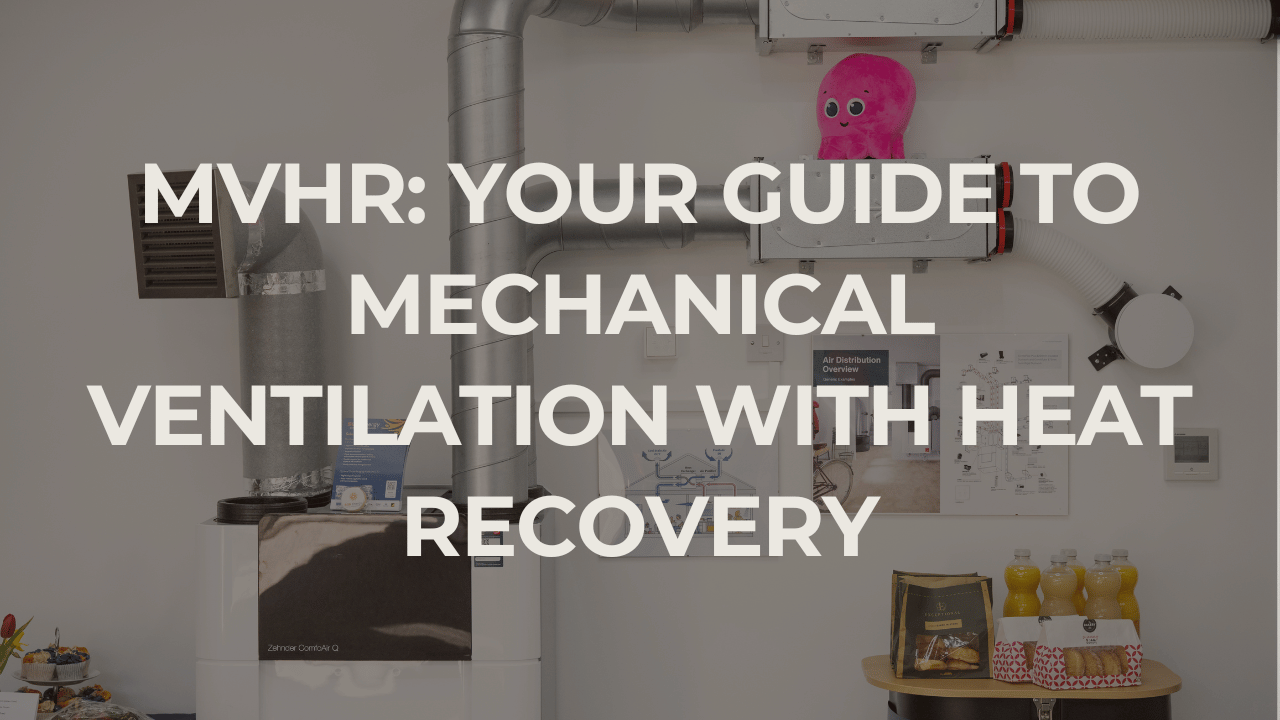
MVHR, or Mechanical Ventilation with Heat Recovery, can be an effective ventilation solution for modern, energy-efficient homes. Although the terminology may sound technical, this guide will walk you through the basics of MVHR and explain how it works.
Understanding MVHR: What is it?
At its core, MVHR combines controlled ventilation with heat recovery. It helps keep the air in your home or workplace fresh while recovering some of the heat that would otherwise be lost when stale air is removed.
A well-designed, correctly installed and maintained system can improve indoor air quality and reduce ventilation heat loss. However, MVHR does not replace your heating system, and its performance will depend on factors such as the airtightness of the property, the system design and how well it has been commissioned.
The working principles of MVHR
Understanding how MVHR works does not require a degree in engineering. Here is a straightforward breakdown:
Step 1: Fresh-air intake
The MVHR system draws fresh outdoor air into the property and passes it through a filter. The fresh air is then supplied to habitable rooms such as bedrooms and living areas.
At the same time, stale and moisture-laden air is extracted from rooms such as kitchens, bathrooms and utility rooms. This continuous movement of air can help reduce the build-up of humidity, pollutants and stale air.
Step 2: Heat recovery
Before the stale indoor air is expelled outside, it passes through a heat exchanger inside the MVHR unit.
The heat exchanger transfers much of the warmth from the outgoing air to the incoming fresh air. The two air streams remain separate and do not normally mix.
Step 3: Tempered-air distribution
The recovered heat helps warm, or temper, the incoming fresh air before it is circulated through the property.
This can reduce the amount of heat lost through ventilation and lessen the demand placed on the existing heating system. The exact performance and energy savings will depend on the property, equipment, installation and system settings.
Who could benefit from an MVHR System?
Who is most likely to benefit from installing an MVHR system?
Modern homes and new builds
New and modern homes, particularly those designed to be well insulated and airtight, can be strong candidates for MVHR.
As these properties have less uncontrolled air leakage, a correctly designed MVHR system can provide continuous ventilation while recovering heat from the outgoing air. It is usually easiest to incorporate the required ductwork during the design and construction of a new property.
MVHR may also be suitable for some major renovation projects, although the available space for the unit and ductwork will need to be carefully considered.
Energy-conscious homeowners
An MVHR system may appeal to homeowners who want to improve indoor air quality while reducing ventilation heat loss.
For the best results, the system should be professionally designed, installed, balanced and commissioned. Filters will also need to be checked, cleaned or replaced in line with the manufacturer’s instructions.
Considering MVHR?
We hope this guide has explained the fundamentals and potential advantages of an MVHR system.
Whether MVHR is suitable for your property will depend on its construction, airtightness, layout and available space for ductwork. Professional advice is therefore important before choosing or installing a system.
To find out whether MVHR could be right for your home or project, get in touch with our team for expert advice and guidance.
We can also provide other sustainable solutions for your home, including solar PV panels and electric-vehicle charging points. Contact us at info@sgs-energy.co.uk to learn more.