Solar panels are becoming increasingly popular among homeowners looking for a sustainable source of electricity and a way to reduce their reliance on the grid.
However, solar panels can sometimes generate more electricity than a household needs at that moment. Instead of allowing this surplus electricity to be exported without payment, homeowners may be able to store it in a solar battery or earn money by selling electricity back to the grid through an export tariff.
This guide explains how the Smart Export Guarantee works, who may be eligible and what to consider when comparing solar export tariffs.
Solar energy and surplus electricity
Solar photovoltaic systems generate electricity from daylight. During bright periods, a system may produce more electricity than the property is using.
This surplus electricity can be:
- Used to charge a solar battery
- Used by appliances or an electric vehicle
- Exported to the electricity grid
- Sold through a Smart Export Guarantee tariff
Combining solar panels with battery storage and an appropriate export tariff can help homeowners make better use of the renewable electricity they generate.
How does selling electricity back to the grid work?
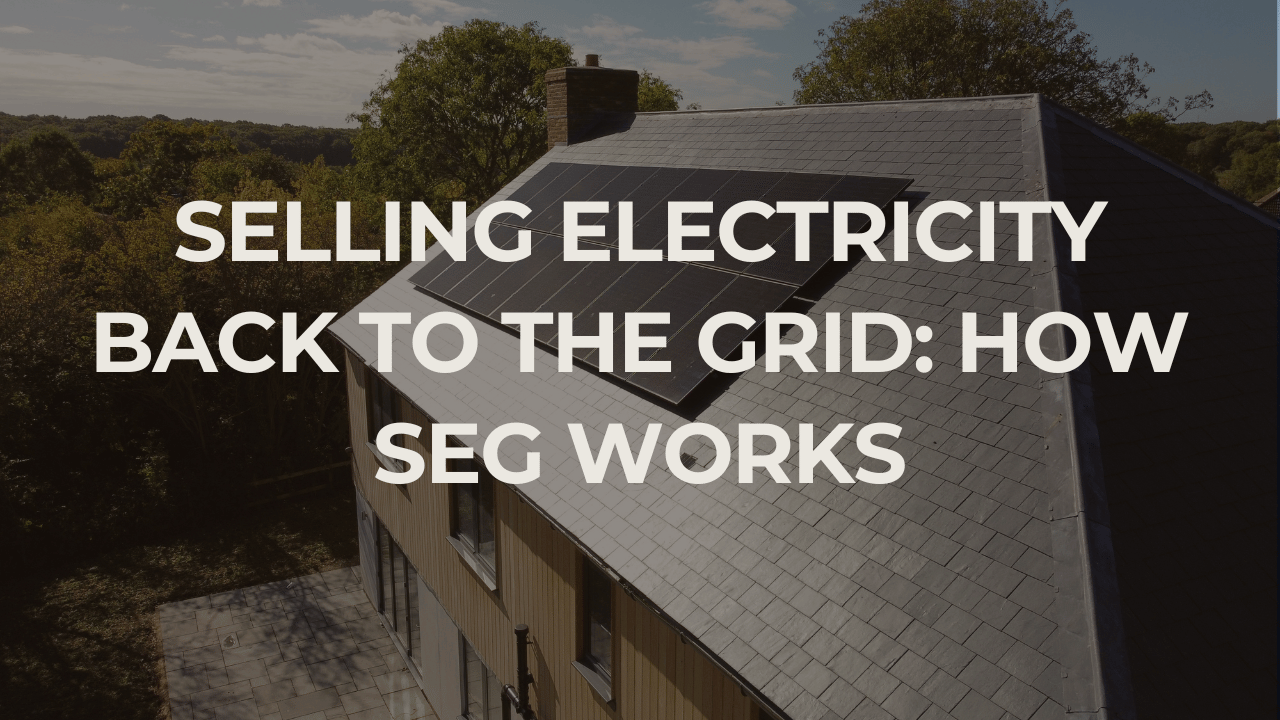
The Smart Export Guarantee, commonly known as SEG, enables eligible small-scale renewable electricity generators to receive payments for electricity exported to the National Grid.
To take part, you will generally need:
- An eligible installation: Your solar panel system and installer must normally be certified through the Microgeneration Certification Scheme (MCS) or an accepted equivalent.
- An export-capable meter: You need a registered meter capable of recording the electricity exported to the grid. This will usually be a smart meter that can provide half-hourly export readings.
- An export tariff: You must apply directly to an electricity supplier offering a SEG or similar export tariff. Payments do not begin automatically.
- Recorded exports: Your supplier calculates payments using readings showing how many kilowatt-hours of electricity you have exported.
SEG suppliers set their own rates, contract lengths and conditions. Tariffs may be fixed or variable, but an official SEG tariff must always pay more than zero for eligible exported electricity.
Benefits of exporting solar electricity
Reduce your electricity bills
Generating and using your own electricity reduces the amount you need to import from the grid. Electricity used within the property will not receive an export payment, but it can help reduce your electricity bills.
Earn money from surplus electricity
When your solar panels generate more electricity than you can use or store, an export tariff allows you to receive payment for the surplus sent to the grid.
Support a lower-carbon electricity system
Exported solar electricity can be used elsewhere on the electricity network, helping increase the amount of renewable electricity available to other homes and businesses.
What happens to unused solar electricity?
Solar electricity is normally used within the property first. If the panels produce more than the household is consuming, the surplus may be stored in a battery or exported to the grid.
Without an export tariff, surplus electricity may still flow into the grid, but the homeowner will not necessarily receive payment for it. Applying for a suitable tariff ensures eligible exports are measured and paid for.
A solar battery provides another option. It can store surplus electricity during the day so that it can be used in the evening or when solar generation is lower.
Selling electricity back to the grid in the UK
The Smart Export Guarantee launched on 1 January 2020. It applies to eligible installations in England, Scotland and Wales. SEG tariffs are not available in Northern Ireland, although individual suppliers may offer separate export arrangements there.
Under SEG, eligible homeowners and businesses can receive payments for renewable electricity exported to the grid. Your export supplier does not have to be the same company that supplies the electricity you use.
A professional solar installer can help ensure that your system is properly certified, registered and equipped with suitable export metering.
Potential earnings
The amount you can earn from selling solar electricity back to the grid depends on:
- How much electricity your system generates
- How much electricity you use within the property
- The amount stored in a battery
- The number of kilowatt-hours exported
- The rate offered by your export supplier
- Whether the tariff has fixed or variable rates
There is no standard annual payment or set SEG rate. Each supplier decides how much it will pay and the terms attached to its tariff.
You can estimate potential earnings using this calculation:
Electricity exported in kWh × export rate per kWh = export earnings
For example, exporting 1,500kWh at a rate of 10p per kWh would generate £150. This is an illustrative calculation rather than a guaranteed return.
Because tariffs and eligibility conditions can change, compare current offers before choosing a supplier.
Understanding the smart export guarantee
The Smart Export Guarantee is a government-backed initiative that requires certain electricity suppliers to offer eligible small-scale generators payment for low-carbon electricity exported to the grid.
Eligible technologies include:
- Solar photovoltaic panels
- Wind turbines
- Hydroelectric systems
- Anaerobic digestion
- Micro combined heat and power
Solar PV, wind, hydro and anaerobic digestion systems must have a total installed capacity of no more than 5MW. Micro-CHP systems must have a capacity of no more than 50kW. Installations must be located in Great Britain and meet the relevant eligibility criteria.
For a typical domestic solar installation, you will usually need:
- An MCS certificate or evidence of equivalent certification
- An export-capable smart meter
- An approved renewable electricity system
- An account with a SEG or export tariff supplier
Homeowners already receiving Feed-in Tariff generation payments may still be able to use SEG, but they cannot receive both FIT export payments and SEG payments for the same electricity. They would need to opt out of the FIT export payment before receiving SEG payments.
Storing vs selling unused solar electricity
Storing and selling surplus electricity can both provide benefits.
A solar battery allows you to use more of the electricity generated by your panels. This may reduce the amount of electricity you need to buy from the grid, particularly during the evening.
Selling surplus electricity provides a financial return when your panels generate more than you can use or store.
The best option depends on:
- Your household electricity consumption
- The price you pay for imported electricity
- Your available export rate
- When you use the most electricity
- The cost and capacity of a battery
- Whether you are on a time-of-use tariff
Some homeowners use a combination of battery storage and grid export. The battery supplies the home when needed, while any remaining surplus electricity is exported.
Some suppliers may also pay for electricity exported from a battery. However, suppliers are not required to pay SEG rates for non-renewable electricity imported from the grid, stored and later exported. Check the conditions of your chosen tariff.
How to maximise your solar electricity
To get more value from your solar panel installation:
- Use energy-intensive appliances while your panels are generating electricity
- Consider installing a correctly sized solar battery
- Monitor your system’s generation and household consumption
- Compare import and export tariffs regularly
- Check the system if its performance falls unexpectedly
- Choose a qualified and reputable solar installer
- Consider your typical energy use before deciding on the system size
Using more solar electricity within your property may sometimes save more money than exporting it, particularly when the price of imported electricity is higher than the export rate.
Choosing an energy supplier
Export rates and conditions vary between suppliers and can change over time. Compare several tariffs rather than choosing one based on the headline rate alone.
Consider:
- The payment per kWh
- Whether the rate is fixed or variable
- Contract length
- Payment frequency
- Exit conditions
- Meter requirements
- Whether you must also buy electricity from the supplier
- Whether battery exports are eligible
Your SEG supplier does not need to be the same company that supplies your imported electricity, although some tariffs may offer higher rates when both services are with the same supplier.
Ready to have solar panels installed?
Investing in solar panels can help reduce the electricity you buy from the grid while giving you the opportunity to earn money from surplus generation.
Through the Smart Export Guarantee, an eligible system can turn unused solar generation into an additional financial benefit. Combining solar panels with battery storage can provide even greater control over how and when your renewable electricity is used.
SGS Energy provides professional solar panel installation and tailored renewable energy solutions. Our team can help you choose a system that reflects your property, electricity consumption and long-term energy goals.
Contact SGS Energy to learn more and request a quote for your solar panel installation.
Frequently asked questions
What is the price per kWh for selling solar electricity back to the grid?
There is no set SEG price per kWh. Individual suppliers decide the tariffs they offer, which may be fixed or variable. An official SEG tariff must always pay more than zero, but the available rate and conditions can change.
Compare current tariffs and check the full terms before applying.
Can I sell solar electricity to my neighbours?
Not through the Smart Export Guarantee. SEG allows eligible generators to export electricity to the grid and receive payment from an electricity supplier.
Directly supplying electricity to another property would involve separate technical, metering and regulatory requirements and may require specialist advice.
Are there special requirements for selling electricity through SEG?
Yes. For a typical solar installation, the system must be located in Great Britain, have a total installed capacity of no more than 5MW and meet the applicable certification requirements.
You will normally need an MCS certificate or recognised equivalent, an export-capable meter and an account with a supplier offering a SEG tariff.
Do SEG payments begin automatically?
No. You must apply directly to a supplier offering a SEG tariff. Installing solar panels and exporting electricity does not automatically register you for payments.
Can I use SEG if I have a solar battery?
Yes, a property with battery storage may still be eligible. However, suppliers can set conditions around electricity stored from the grid and later exported, so check the tariff terms before applying.