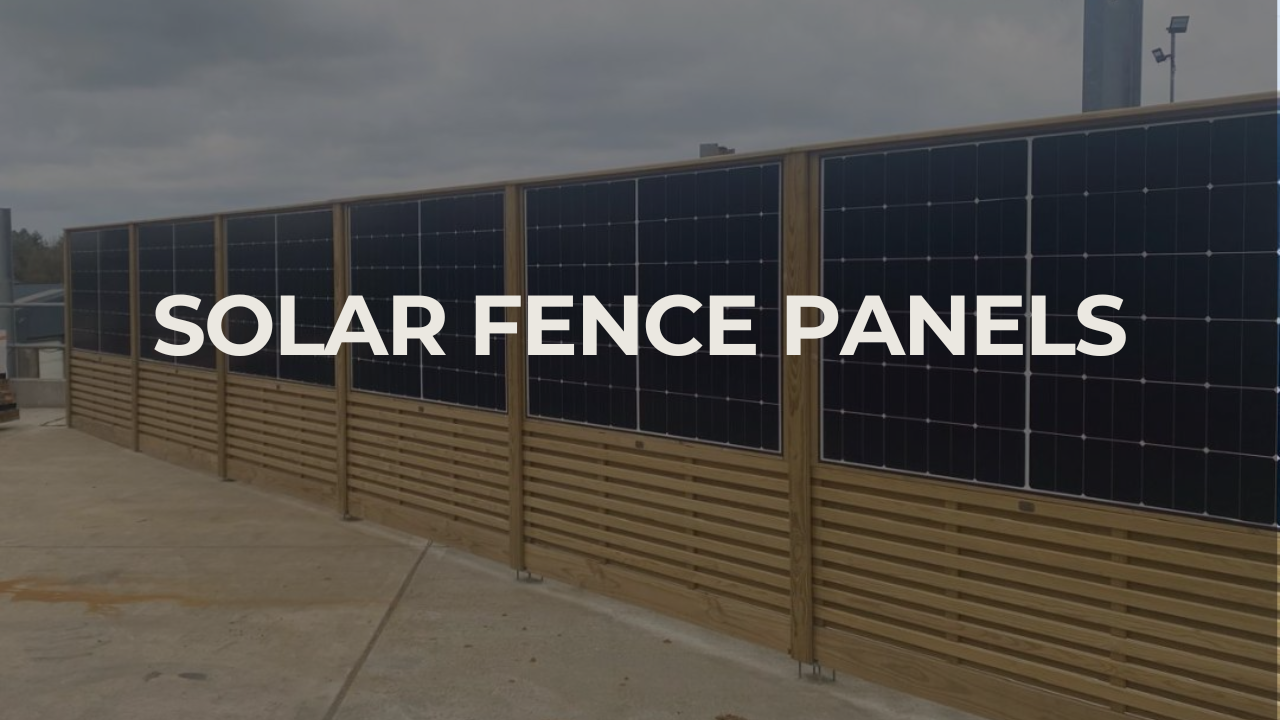
Solar panels do not always have to be installed on a roof. Solar fence panels provide another way to generate renewable electricity by incorporating photovoltaic panels into a property boundary.
A solar panel fence can be useful where roof space is limited, heavily shaded, unsuitable for installation or already occupied. It may also appeal to homeowners, farms and businesses that want to generate electricity while retaining a functional boundary.
However, solar fence panels are not suitable for every site. Their performance depends on factors including orientation, shading, panel technology, fence height and the surrounding environment. A professional survey is therefore essential before choosing a system.
SGS Energy designs and installs solar energy systems for properties in Kent and the surrounding areas. This guide explains how solar fence panels work, their potential advantages and the important points to consider before installation.
What are solar fence panels?
Solar fence panels are photovoltaic, or PV, modules installed vertically as part of a fence or boundary structure. They perform two functions: defining or securing the boundary and generating electricity from daylight.
The electricity produced by the panels is direct current, commonly called DC electricity. An inverter converts it into alternating current, or AC electricity, that can be used by appliances within the property.
Depending on the design, surplus electricity may also be:
- Stored in a solar battery for later use
- Exported to the electricity grid
- Used to support equipment such as an EV charger or energy diverter
Some solar fences use conventional monofacial panels, which generate mainly from one face. Others use bifacial solar panels, which can generate from light reaching both sides of the module. The most suitable option depends on the location, available space, expected shading and overall system design.
How do solar fence panels work?
Like rooftop solar panels, solar fence panels use photovoltaic cells to convert daylight into electricity. They can continue generating on cloudy days, although output will normally be higher under brighter conditions.
Because the modules are mounted vertically, their generation profile may differ from that of a conventional south-facing roof installation.
Bifacial panels with active faces directed towards the east and west can generate more electricity during the morning and late afternoon than a typical south-facing array, which usually has its strongest output around the middle of the day. This can be helpful for properties with higher electricity use at the beginning and end of the day.
That does not mean an east-west solar fence is automatically the best arrangement. The most productive orientation depends on:
- The direction in which each active panel face points
- Local shading from trees, buildings and other structures
- The amount of reflected light reaching the rear of bifacial panels
- Fence height and spacing
- The property’s electricity-consumption pattern
- Local weather and site conditions
A site-specific generation forecast should be completed rather than relying on a general rule about orientation.
Benefits of solar fence panels
Make use of an existing boundary
Solar fence panels can generate renewable electricity without occupying additional roof space. They may be particularly useful where a property has a long, open boundary but limited suitable roof area.
Generate electricity from daylight
A properly designed solar fence can reduce the amount of electricity a property needs to purchase from the grid. The actual saving will depend on the system’s output, electricity prices and how much of the generated energy is used on site.
Provide a different generation profile
Vertical east-west bifacial systems can provide morning and afternoon generation peaks. This may complement an existing south-facing rooftop system or better match certain patterns of energy use.
Combine solar generation with a functional structure
A solar fence can act as a boundary, screen or security feature while also generating electricity. The supporting structure must nevertheless be designed for the site’s ground conditions, wind exposure and intended use.
Suit several types of property
Solar fence panels may be considered for:
- Residential gardens
- Farms and agricultural land
- Commercial premises
- Industrial sites
- Schools and community facilities
- Car parks and other managed boundaries
Suitability must always be established through a structural, electrical and solar assessment.
Are solar fence panels as efficient as rooftop panels?
There is no universal answer. A solar fence and rooftop array should be compared using predicted annual generation rather than panel wattage alone.
An unshaded, south-facing roof with a suitable pitch may generate more electricity per panel than a vertical fence in the same location. However, a solar fence may still be worthwhile when the roof is shaded, faces an unsuitable direction or cannot accommodate enough panels.
Bifacial solar fence panels can also collect reflected and diffuse light on their rear surface. Their additional output depends on factors such as ground reflectivity, spacing and whether objects obstruct either face.
A reliable proposal should show:
- The system’s installed capacity in kilowatt peak, or kWp
- Estimated annual generation in kilowatt-hours
- The assumptions used for shading and orientation
- Expected on-site electricity use
- Estimated grid exports
- Potential savings based on a realistic usage profile
Be cautious of any proposal that guarantees a particular saving without first assessing the property.
How much do solar fence panels cost?
There is no dependable flat price per metre for solar fence panels. Two fences of the same length may have very different costs and generation capacities.
The final price can be affected by:
- The number, size and type of solar modules
- Whether monofacial or bifacial panels are used
- Posts, frames and mounting components
- Ground conditions and foundation requirements
- Wind-load and structural requirements
- Inverter and electrical protection equipment
- Cable routing and distance from the consumer unit
- Battery storage
- Access to the installation area
- Planning or design work
- Electricity-network connection requirements
- Product and workmanship warranties
Any quotation should clearly state what is included, whether VAT is included and which costs could change following the site survey.
It is also important to compare value using predicted generation and system quality—not just the total fence length or the lowest initial price.
What should be considered before installation?
Sunlight and shading
Trees, hedges, nearby buildings and other boundary structures can shade the panels and reduce generation. Both sides of a bifacial panel should be considered during the survey.
Future shading should also be assessed. A small tree may become a significant obstruction during the system’s working life.
Orientation
The description “east-west solar fence” can be confusing. What matters is the direction in which the active panel surfaces face, not simply the direction in which the fence line runs.
For example, a fence running broadly north to south can allow its two panel faces to point east and west. The right arrangement should be confirmed using site modelling.
Structural design
Solar panels introduce weight and wind loading. The fence structure, foundations, posts and fixings must be suitable for the site and designed to remain secure in exposed conditions.
A solar panel should not simply be attached to an existing garden fence unless the complete structure has been assessed as suitable.
Boundary position and ownership
Before installation, confirm who owns the boundary and whether any title restrictions, covenants, access rights or neighbouring-property considerations apply.
The panels and supporting structure should remain within the property boundary unless an appropriate agreement is in place.
Electrical connection
The system will need suitable cabling, isolation, protection and inverter equipment. The installer should also determine whether the local Distribution Network Operator must be notified or give approval before the system is connected.
Maintenance and access
Solar fence panels are easier to reach than most rooftop panels, but they may also be more exposed to mud, vegetation, impact and accidental damage.
The design should allow safe inspection and maintenance. Cleaning should be carried out when required and in accordance with the panel manufacturer’s guidance.
Do solar fence panels need planning permission?
Planning requirements depend on the property, the proposed structure and its location.
In England, a new fence will generally require planning permission when it is:
- More than one metre high and next to a highway used by vehicles, including the footpath of that highway; or
- More than two metres high elsewhere
Additional restrictions can apply to listed buildings, conservation areas, properties affected by an Article 4 direction and sites with existing planning conditions.
Because solar fence panels combine a boundary structure with electricity-generating equipment, you should confirm the requirements with the relevant local planning authority before work begins. Planning rules may also differ outside England.
SGS Energy can consider planning constraints during the initial site assessment, but the local planning authority determines whether permission is required.
Can solar fence panels connect to a battery?
Yes. Subject to compatible equipment and correct system design, electricity generated by solar fence panels can be stored in a battery.
A battery can allow energy generated during daylight hours to be used later, such as during the evening. Whether a battery is financially worthwhile depends on:
- How much electricity the fence is expected to generate
- When the property uses electricity
- Existing rooftop solar generation
- Battery capacity and usable storage
- Import and export electricity tariffs
- The proposed system controls
Battery capacity should be selected using generation and consumption data rather than choosing the largest available unit.
Can you sell surplus electricity to the grid?
Eligible solar PV installations in Great Britain may receive payments for electricity exported through a Smart Export Guarantee tariff.
Eligibility conditions apply. These can include appropriate metering and evidence that the installation has been certified through MCS or an accepted equivalent scheme. Individual electricity suppliers set their own export rates, contract terms and application requirements.
Export income should be treated as one part of the financial assessment rather than the sole reason for installing solar fence panels.
Why choose SGS Energy for solar fence panels?
Every property requires a different approach. SGS Energy assesses the available boundary, expected shading, electrical connection and energy use before recommending a solar fence system.
Our approach includes:
Site-specific system design
We assess whether solar fence panels are suitable for your property and compare them with other options, including rooftop solar panels and battery storage.
Considered integration
The supporting structure, cable routes and electrical equipment are planned as part of the complete installation rather than treated as separate additions.
Clear generation estimates
Your proposal should explain the proposed system capacity, estimated generation and the assumptions behind the forecast.
Local support
SGS Energy works with homeowners, businesses and organisations in Kent and the surrounding areas, providing support from the initial survey through to installation and aftercare.
Solar fence panels: FAQs
Do solar fence panels work in the UK?
Yes. Solar PV panels generate electricity from daylight and can operate during cloudy weather. Their annual output depends on orientation, shading, location and system design.
Are all solar fence panels bifacial?
No. Solar fences can use either monofacial or bifacial modules. Bifacial panels can generate from light reaching both faces, but they require an appropriate layout to make effective use of the rear surface.
Can solar fence panels replace a normal fence?
They can form part of a boundary system, provided the structure is designed for the required privacy, security, ground conditions and wind loading. Not every solar panel or existing fence is suitable for this purpose.
Will a solar fence eliminate my electricity bill?
Usually not. Savings depend on the amount of electricity generated and how much is used on site. Grid charges and electricity used when the panels are not generating may still appear on your bill.
Can I add solar fence panels to an existing rooftop system?
Potentially. The inverter, electrical connection, network limits and existing system design will need to be assessed. In some cases, separate inverter equipment or an updated network application may be required.
How long do solar fence panels last?
The expected working life and warranty depend on the chosen panels, mounting structure, inverter and other components. These details should be included in the written proposal and product documentation.
Arrange a solar fence panel survey
Solar fence panels can turn a suitable boundary into a practical source of renewable electricity, but successful installation depends on careful design.
SGS Energy can assess your property, review shading and orientation, estimate potential generation and provide an itemised quotation for a suitable solar fence panel system.
Contact SGS Energy to arrange a solar fence panel consultation in Kent or the surrounding areas.