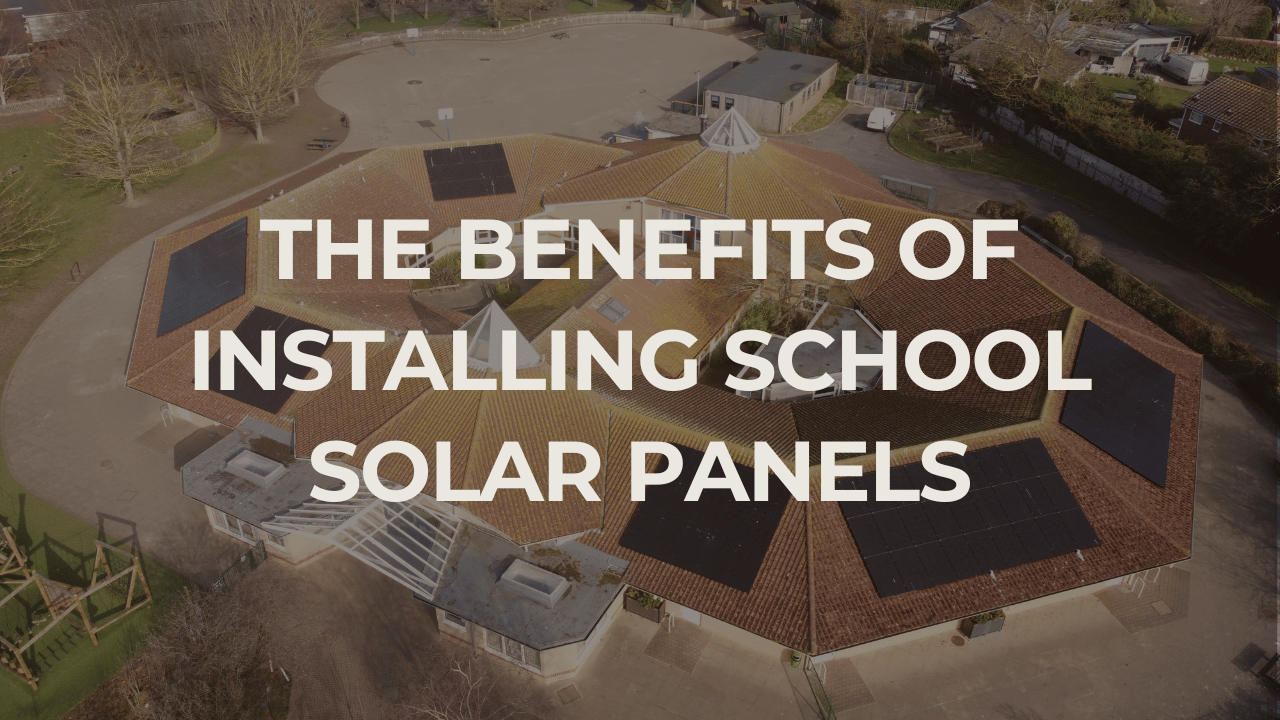
With energy costs continuing to place pressure on education budgets, many schools, colleges and academy trusts are exploring solar panels as a way to generate more of their own electricity.
A well-designed school solar panel system can reduce the amount of electricity purchased from the grid, lower operational carbon emissions and provide real-world renewable energy data for lessons.
Depending on the funding arrangement, schools may also be able to install solar panels without paying the full cost upfront.
However, every school is different. Roof condition, shading, electricity consumption, system size and finance arrangements will all affect the potential savings.
Here are six of the main benefits of installing solar panels at a school.
1. Lower electricity bills
Schools typically use a significant amount of electricity during daylight hours, which is also when solar panels generate power.
Electricity produced by the panels can be used immediately to operate lighting, computers, classroom technology, kitchens, ventilation systems and other electrical equipment.
Every unit of solar electricity used on site reduces the amount that needs to be purchased from an electricity supplier.
The financial benefit will depend on how closely the school’s electricity consumption matches the output of the solar panels. A school with high daytime demand may be able to use a large proportion of the electricity it generates.
Before designing a system, an installer should review at least 12 months of electricity bills. Half-hourly consumption data is particularly useful because it shows when electricity is being used throughout the day.
This allows a solar installation to be designed around the school’s actual needs rather than a generic system size.
2. Greater protection from changing energy prices
Solar panels cannot remove a school’s electricity costs completely, but they can reduce the proportion of electricity that needs to be purchased from the grid.
This means part of the school’s energy use becomes less exposed to changes in electricity prices.
The level of protection will depend on:
- The size of the solar installation
- How much generated electricity is used on site
- Seasonal changes in solar output
- Future electricity prices
- Maintenance and finance costs
- Whether battery storage is included
Schools should be cautious about proposals offering guaranteed savings or a standard payback period without first assessing the site.
A credible financial forecast should be based on the school’s electricity consumption, roof space and proposed funding model. It should also clearly distinguish between estimated savings and any guaranteed contractual terms.
3. Potential payments for exported electricity
A school may not use every unit of electricity generated by its solar panels.
Surplus electricity can be exported to the grid, and eligible installations may receive payments through the Smart Export Guarantee, commonly known as the SEG.
Participating electricity suppliers set their own export rates, contract terms and eligibility requirements. Payments are calculated using measured electricity exports, so schools should compare suitable tariffs rather than assuming their existing supplier offers the best arrangement.
The previous Feed-in Tariff scheme closed to new applicants on 1 April 2019. It should not be presented as an income option for a new school solar installation.
Export payments are generally an additional benefit rather than the main financial reason for installing solar panels.
In many cases, electricity used directly by the school is more valuable than electricity exported at a lower rate. A system should therefore be designed around the school’s consumption rather than simply installing as many panels as possible.
4. Lower operational carbon emissions
Generating renewable electricity on site can help a school reduce the carbon emissions associated with the electricity it purchases.
Solar panels can form part of a wider estate sustainability plan that may also include:
- LED lighting
- Improved insulation
- Better heating controls
- Building energy management systems
- More efficient ventilation
- Heat pumps
- Staff and pupil energy-saving initiatives
Solar should not necessarily be considered in isolation. Reducing unnecessary energy use first may allow the school to install a smaller and more appropriately designed renewable energy system.
Schools can record their electricity consumption and solar generation before and after installation. This makes it easier to assess performance, identify unusual energy use and demonstrate progress to governors, trustees, pupils and the wider community.
5. Practical learning opportunities for pupils
School solar panels can also become a useful educational resource.
Many commercial solar systems include an online monitoring platform showing information such as current generation, daily output, historic performance and estimated carbon savings.
Teachers can use this data across several subjects.
In mathematics, pupils can calculate averages, percentages and changes in electricity generation throughout the year.
In science, the system can support lessons about electricity, renewable energy, energy transfer and climate change.
In geography, pupils can explore how weather, location, roof orientation and energy policy affect renewable energy projects.
Solar monitoring data can also be used for computing and business studies projects involving charts, investment, costs and estimated payback periods.
Schools interested in using the system as a teaching resource should ask whether the proposed monitoring platform includes a clear public-facing dashboard. Some systems are designed mainly for facilities managers and may require an additional display for classroom use.
6. Visible environmental leadership
Schools play an important role within their local communities.
A solar installation provides visible evidence that the school is taking practical steps to manage its energy consumption and reduce its environmental impact.
It may also support:
- School sustainability plans
- Eco committees
- Pupil-led environmental projects
- Community engagement
- Trust-wide decarbonisation programmes
- Reporting to governors and trustees
Environmental claims should be supported by measured data.
For example, a school should avoid saying that it is entirely solar powered unless the panels genuinely provide all or nearly all of its electricity.
A reception display or online dashboard can show pupils and visitors how much electricity the system is generating and how performance changes throughout the year.
How much can a school save with solar panels?
There is no single savings figure that applies to every school.
The financial performance of a solar installation will depend on:
- Annual electricity consumption
- When electricity is used
- Available roof space
- Roof orientation and shading
- Roof condition
- Electricity prices
- Export tariff rates
- System size
- Funding arrangements
- Maintenance costs
A credible solar proposal should state the proposed system size, estimated annual generation and the proportion of electricity expected to be used by the school.
It should also show how much electricity is likely to be exported, the assumptions used to calculate savings and any maintenance or finance costs included in the forecast.
Schools should ask to see both first-year projections and longer-term estimates rather than relying on one headline figure.
The forecast should also explain what happens if electricity prices, export rates or solar generation differ from the original assumptions.
How can schools fund solar panels?
The most suitable funding arrangement will depend on the school’s governance structure, building ownership, available capital and long-term plans.
Capital purchase
Under a capital purchase, the school, academy trust or responsible body pays for the installation and owns the equipment.
This model may provide the greatest long-term financial benefit because the school receives the full value of the generated electricity.
However, it requires upfront capital and places responsibility for maintenance, insurance and equipment replacement on the system owner.
Power purchase agreement
A power purchase agreement, or PPA, allows a third-party provider to finance, install, own and maintain the solar panels.
The school then purchases the electricity generated by the system at an agreed rate.
This may enable a school to benefit from solar electricity without paying the full installation cost upfront. However, a PPA is a long-term commercial agreement and its terms must be reviewed carefully.
Schools should consider the contract length, electricity price, annual price increases, maintenance responsibilities, roof access and arrangements at the end of the agreement.
Schools should also obtain appropriate legal and financial advice before entering a long-term energy agreement.
Government and public-sector support
Government support may be available for selected school solar projects, but access is often targeted rather than open to every school.
Funding programmes, eligibility rules and application windows can change. Schools should therefore check current government guidance rather than relying on historic grant information.
Some public-sector schemes may support solar panels when they form part of a wider eligible energy or decarbonisation project. They should not be described as general solar grants unless the current rules specifically confirm this.
Is your school suitable for solar panels?
A desktop estimate can provide an initial indication of the available roof area, but it cannot replace a proper site assessment.
An assessment should consider:
- Roof condition and remaining lifespan
- Structural suitability
- Orientation and shading
- Existing electricity consumption
- Electrical supply capacity
- Planning or listed-building restrictions
- Grid connection requirements
- Safe access and safeguarding arrangements
Installing panels on a roof that will soon need replacing may result in avoidable removal and reinstallation costs.
The school’s roof condition and long-term estate plans should therefore be reviewed before the project proceeds.
The installer should also explain how work will be managed around pupils, staff and normal school operations.
Do schools need battery storage?
Battery storage allows some surplus solar electricity to be retained for use later rather than exported immediately.
Whether a battery is financially worthwhile will depend on the school’s electricity use outside the main solar-generating hours, as well as battery cost, capacity, efficiency and expected lifespan.
Battery storage should be modelled separately from the solar panels. This allows the school to see whether it improves the overall financial case or simply adds cost to the project.
A battery may be useful where a school has significant late-afternoon or evening electricity demand. It may offer less value where most generated electricity can already be used during the day.
Will solar panels work during a power cut?
Standard grid-connected solar panels normally switch off during a power cut.
This is a safety requirement designed to protect the electricity network and engineers working on it.
A battery may also switch off unless the system has been specifically designed with backup power or island-mode functionality.
Where power-cut resilience is important, the school should identify the essential equipment it wants to maintain and ask for a properly designed backup solution.
Solar panels and a standard battery installation should not be presented as an automatic replacement for an emergency generator or dedicated backup power system.
Questions to ask a school solar installer
Before accepting a solar proposal, schools should ask:
- What electricity consumption data was used to size the system?
- How much generated electricity is expected to be used on site?
- How much electricity is expected to be exported?
- Has the roof condition and structural suitability been assessed?
- Which electricity price and export rate assumptions were used?
- Who will own and maintain the solar panels?
- What warranties apply to the panels, inverter and installation work?
- What happens if the roof needs repairing or replacing?
- Are planning and grid connection applications included?
- How will the work be managed around pupils and safeguarding requirements?
The installer should also be able to provide evidence of relevant commercial or education-sector experience.
Are solar panels right for your school?
Solar panels can help suitable schools reduce the amount of electricity they purchase, manage part of their long-term energy expenditure and bring renewable energy data into the classroom.
The strongest projects begin with the school’s actual electricity consumption, roof condition and estate plans. They should not begin with a generic system size or an unsupported headline saving.
SGS Energy can assess your school’s roof, electricity usage and project requirements before preparing a site-specific solar proposal.
Your proposal can include estimated annual generation, anticipated on-site electricity use, potential exports, indicative savings and available installation or funding options.
Request a school solar assessment
Speak to SGS Energy about the suitability of solar panels for your school, college or academy trust.