Lenham Social Club’s 16 kWp solar PV system generates 27.7 MWh in its first two years
.JPG)

Lenham Social Club’s 16 kWp solar PV system generates 27.7 MWh in its first two years
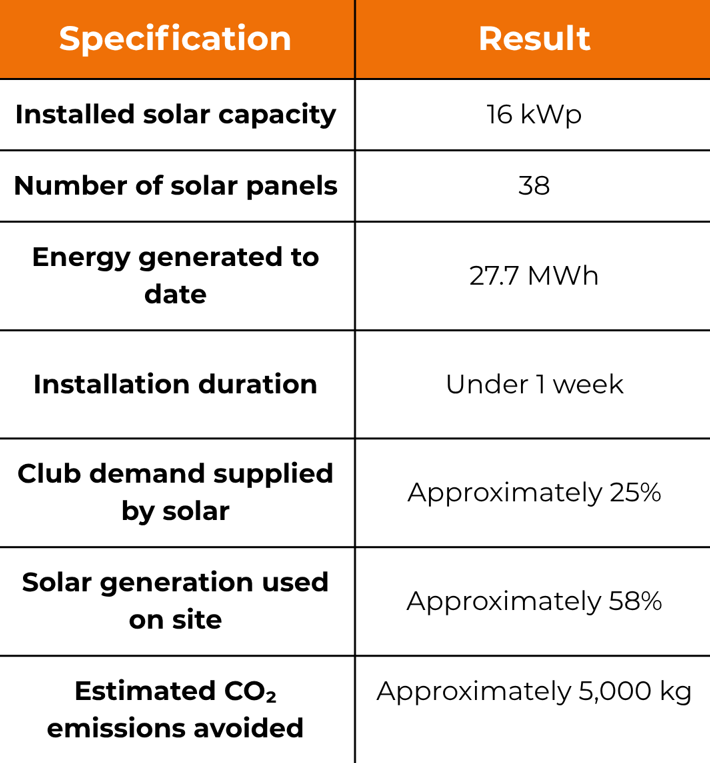
Installed and commissioned in under a week, Lenham Social Club’s 16 kWp solar PV system quickly began making a measurable difference. During its first two years of operation, the system generated 27.7 MWh of renewable electricity, maintained 99% availability and provided around a quarter of the club’s electricity needs.
At the heart of the local community, Lenham Social Club is a busy venue, welcoming people for events and social gatherings throughout the year. With the building in regular use and electricity demand remaining high, the club began looking for a practical way to reduce its reliance on the grid and make better use of its available roof space. Solar PV provided a clear solution.
The project was supported by funding from the Government’s Rural England Prosperity Fund, administered locally by Maidstone Borough Council. With funding in place, the club appointed SGS Energy to design and install a 38-panel rooftop solar PV system. Since commissioning, around 58% of the electricity generated has been used directly on site, reducing the amount of power the club needs to purchase from the grid, while the remainder has been exported.
The system’s monitoring platform also estimates that the installation has avoided approximately 5,000 kg of CO₂ emissions, underlining the operational and environmental value that rooftop solar can deliver for a well-used community venue.
Solar PV system and performance summary
Key wins
27.7 MWh generated, supplying around 25% of electricity demand
During approximately its first two years of operation, the system generated 27.7 MWh of renewable electricity, supplying around a quarter of the club’s total electricity needs and reducing the amount of power purchased from the grid.
Most solar generation used on site
Approximately 58% of the electricity generated was used directly by the club, helping it get greater value from the system by reducing the amount of power purchased from the grid.
An estimated five tonnes of CO₂ emissions avoided
According to the system’s monitoring platform, the electricity generated is estimated to have avoided approximately 5,000 kg of CO₂ emissions.
99% system availability
The solar PV system has maintained 99% availability during the reporting period, demonstrating consistent performance with minimal downtime.
Installation challenges and solutions
#1: Confirming the roof was suitable
Built in 1913, the club’s pitched plain-tile roof first needed to be assessed to ensure it could safely support the solar array. SGS Energy arranged a structural survey ahead of installation, confirming the roof’s load capacity and informing the final mounting design.
#2 Working around the existing fire alarm system
The solar PV system also needed to connect with the club’s existing fire alarm network. SGS Energy worked with site personnel to plan and complete the connection safely, ensuring the installation met the required safety standards.
#3 Replacing damaged roof tiles
During preparation, SGS Energy identified several aged or damaged roof tiles and replaced them as part of the installation, helping to preserve the roof’s appearance while leaving a secure, watertight finish.
#4 Maintaining safe access
The club’s main entrance, rear garden and fire escape route needed to remain accessible throughout the project. SGS Energy arranged bespoke scaffolding to provide safe roof access while keeping the footpath around the building clear, allowing the club to stay open and fully operational during the installation.
Original system design
Before installation, SGS Energy developed a detailed system design based on the club’s roof layout, usable installation area and projected solar performance.
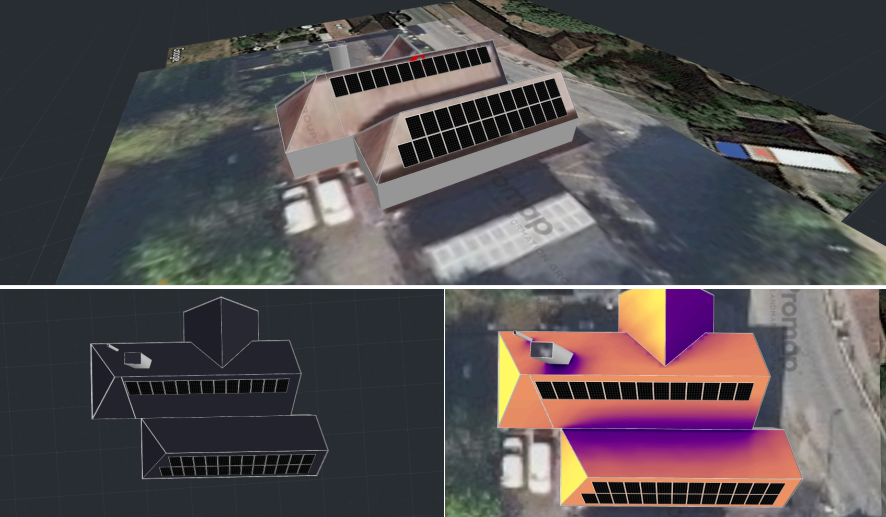
This covered:
- Available roof space and suitable panel locations;
- Roof orientation, shading and existing roof features;
- Expected energy generation; and
- The proposed inverter and optimiser configuration.
The design was included in the quotation, giving the club a clear picture of the proposed system before deciding to proceed.
System monitoring
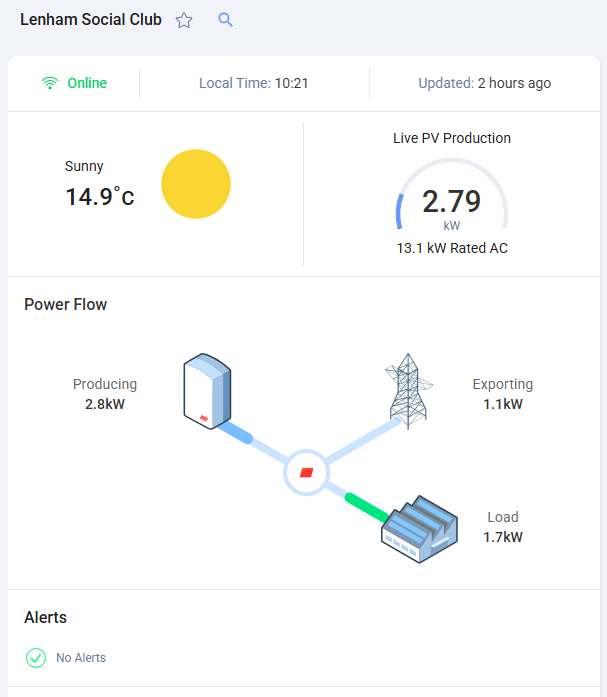
Once the system was installed, the monitoring platform gave SGS Energy and the club access to both current operating information and historical performance data, including:
- Current solar generation;
- Building electricity use;
- Electricity imported from and exported to the grid;
- Inverter and optimiser performance;
- Site availability; and
- System alerts.
This makes it easier to check how the system is performing and support ongoing maintenance. At the latest review, the site was online and operating without any active alerts.
Gallery
.JPG)
.jpg)

.png)